
In good nature: biodiversity reporting in practice
As global demand for natural resources continues to rise, the pressure on ecosystems intensifies. Companies should understand their environmental footprint and their dependencies on nature. Biodiversity is a central pillar of environmental sustainability and many organisations are now taking meaningful steps to address their impact.
Our research highlights that companies in countries such as the UK, Brazil, and Japan are leading the way in adopting the Taskforce on Nature-related Financial Disclosures (TNFD) framework. This is because adopting the framework is encouraged by the government and regulators in these jurisdictions.
In this edition of the Hall of Fame, we spotlight three companies demonstrating notable progress in biodiversity reporting across different sectors.
Our evaluation focuses on three key criteria:
- Scope & impact coverage - extent to which the company identifies and discloses its biodiversity-related impacts, dependencies, and risks across operations and the value chain. This includes clarity on geographic locations, sensitive ecosystems, and a robust materiality assessment.
- Targets, metrics & methodology - whether the company has defined clear, measurable, and time-bound biodiversity targets, supported by transparent methodologies and consistent metrics (e.g., land use change, habitat restoration, species protection).
- Communications, structure & visual clarity – including how the report is structured, use of concise language and supportive visuals (e.g., charts, maps, infographics) to make disclosures accessible and engaging for readers.
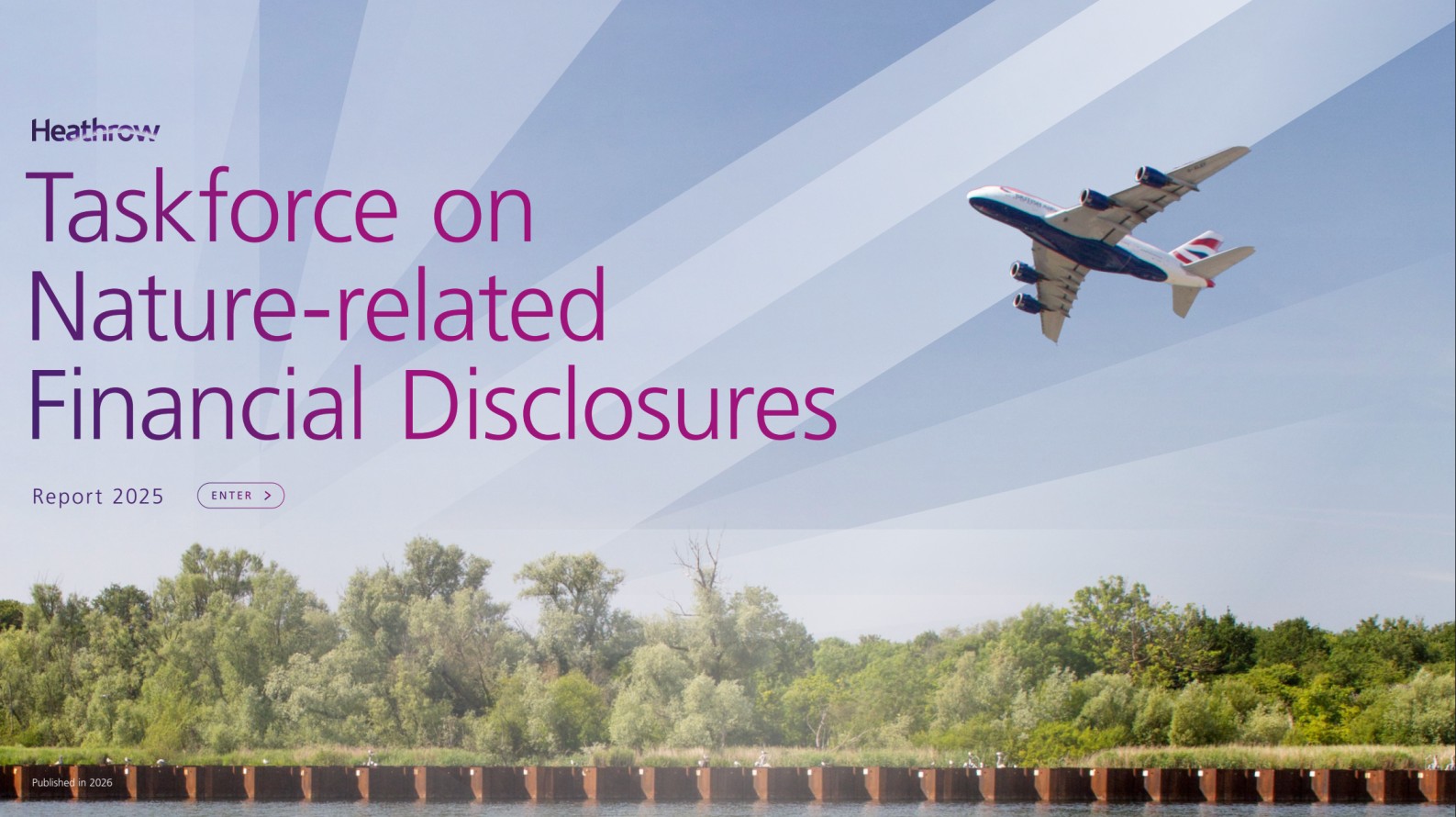
Heathrow Airport
Scope & impact coverage – ★★★★☆ (4/5)
Heathrow sets a strong benchmark for scope. As the first airport to publicly disclose its nature-related impacts and dependencies, it applies a double materiality lens and follows the TNFD’s Locate, Evaluate, Assess and Prepare (LEAP) approach. The disclosure covers both direct operations and key value chain activities, focusing on Tier 1 suppliers across aviation, infrastructure, and retail. Impacts, dependencies, risks and opportunities are clearly linked — showing a coherent overview of nature-related exposure. However, one limitation is the lack of geographic data regarding upstream suppliers. As this information is vital for identifying sensitive ecosystems, location mapping was not included in the current disclosure.
Targets, metrics & methodology – ★★★☆☆ (3/5)
Although targets and metrics are currently underdeveloped, the report is transparent about where it stands. Heathrow reports on existing biodiversity-related data (such as land use and pollution); however, TNFD-aligned and value-chain metrics have not yet been fully developed. Where metric data is unavailable, Heathrow indicates this and provides a clear justification. Furthermore, the report discloses broader goals rather than formal targets, openly acknowledging that not all commitments are measurable or time-bound. Ultimately, the disclosure aligns with the TNFD methodology as closely as currently possible and recognises that further alignment is required for future editions.
Communications, structure & visual clarity – ★★★★★ (5/5)
This is where Heathrow excels. The report is clearly structured following the TNFD framework, with concise and straightforward language. Effective use of imagery and consistent branding makes the content engaging — demonstrating how good design can support complex information.
Mitsui & Co.
Mitsui is one of Japan's leading conglomerates, comprising several large companies with diversified activities across key sectors including energy, mineral and metal resources, infrastructure, chemicals, food, and IT.
Scope & impact coverage – ★★★★☆ (4/5)
Mitsui takes a systematic, tool-driven approach for its biodiversity impact assessment. Using the ENCORE tool, it screens nature-related dependencies and impacts across its portfolio, identifying ten priority business areas. From these, three were selected for deeper LEAP analysis, covering over 500 assets and sites. As part of this process, the company also evaluated ecologically sensitive areas. Materiality analyses are conducted to identify material impacts, risks and opportunities. Nevertheless, it is not clear whether this is a double materiality analysis. This structured prioritisation of business areas is a clear strength. It helps focus efforts where impacts and dependencies are most significant.
Targets, metrics & methodology – ★★★☆☆ (3/5)
The disclosure includes seven time-bound targets which demonstrates solid commitment to biodiversity management. However, detailed metrics and information about methodologies remain limited. While indicators are defined and supported by source references, there is little transparency on how data is calculated or applied in practice.
Communications, structure & visual clarity – ★★★☆☆ (3/5)
The report is clear and technically comprehensive but lacks engagement. Visual elements such as charts or diagrams are limited, and the narrative can feel fragmented. As seen across many early TNFD adopters, the focus is on methodology — sometimes at the expense of storytelling.
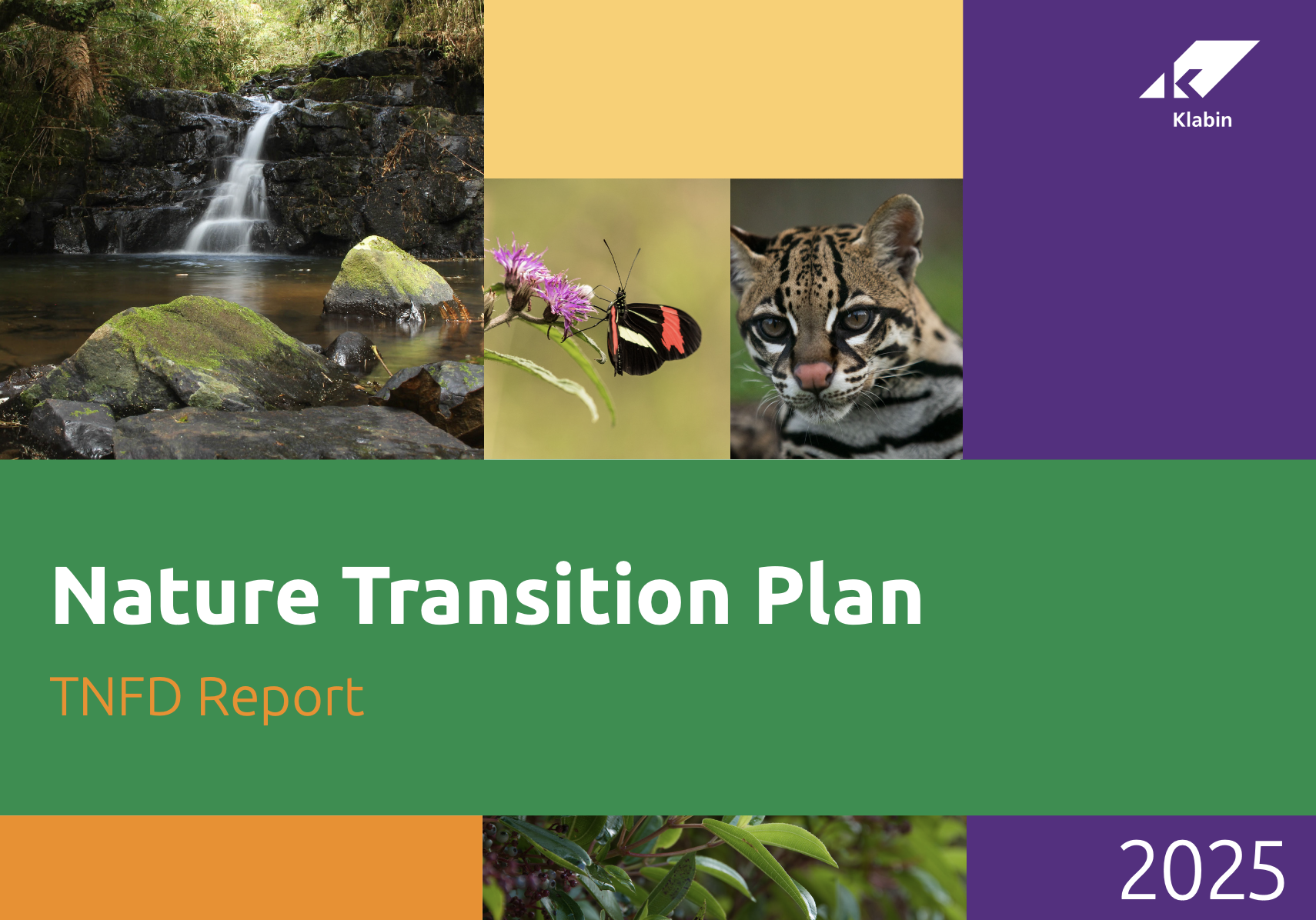
Klabin
Klabin is Brazil's largest producer and exporter of paper, operating across the full packaging value chain — from pulp to corrugated cardboard packaging and industrial sacks.
Scope & impact coverage – ★★★☆☆ (3/5)
Klabin included a detailed and well-rounded assessment in its TNFD Report. It combines the LEAP approach with internal interviews across technical and operational teams to identify 17 material impacts and 8 prioritised dependencies. However, the connection from impacts to risks is less clear. Risks are described at a high level (e.g. climate change, pollution), without elaborating on how they derive from specific impacts or dependencies. The report also indicates that Klabin conducts a double materiality assessment, nevertheless, it is not clear how this fits within the overall process. A sensitive location mapping is included as the initial step of the LEAP assessment.
Targets, metrics & methodology – ★★★★★ (5/5)
Klabin’s TNFD Report stands out for its ambition. It commits to becoming net positive for biodiversity by 2050, supported by interim targets for 2030 and 2040, alongside a zero-deforestation commitment. Importantly, it includes concrete, measurable actions — such as species reintroduction targets — bringing biodiversity commitments closer to operational reality. There is some ambiguity around the application of certain metrics, but overall this is one of the strongest performances in this category.
Communications, structure & visual clarity – ★★★☆☆ (3/5)
The report features an engaging visual illustration of the value chain, clearly delineating upstream, direct operations, and downstream activities. However, the written content has some room for improvement. The language is occasionally wordy and would benefit from a more concise approach, alongside a thorough proofreading to address several typographical and grammatical errors.
Get comfortable, there’s more
If you enjoyed this article, there's plenty more media to get your mind into.


Sign up to our newsletter
and we'll report back to you with industry news and updates you'll actually want to know.